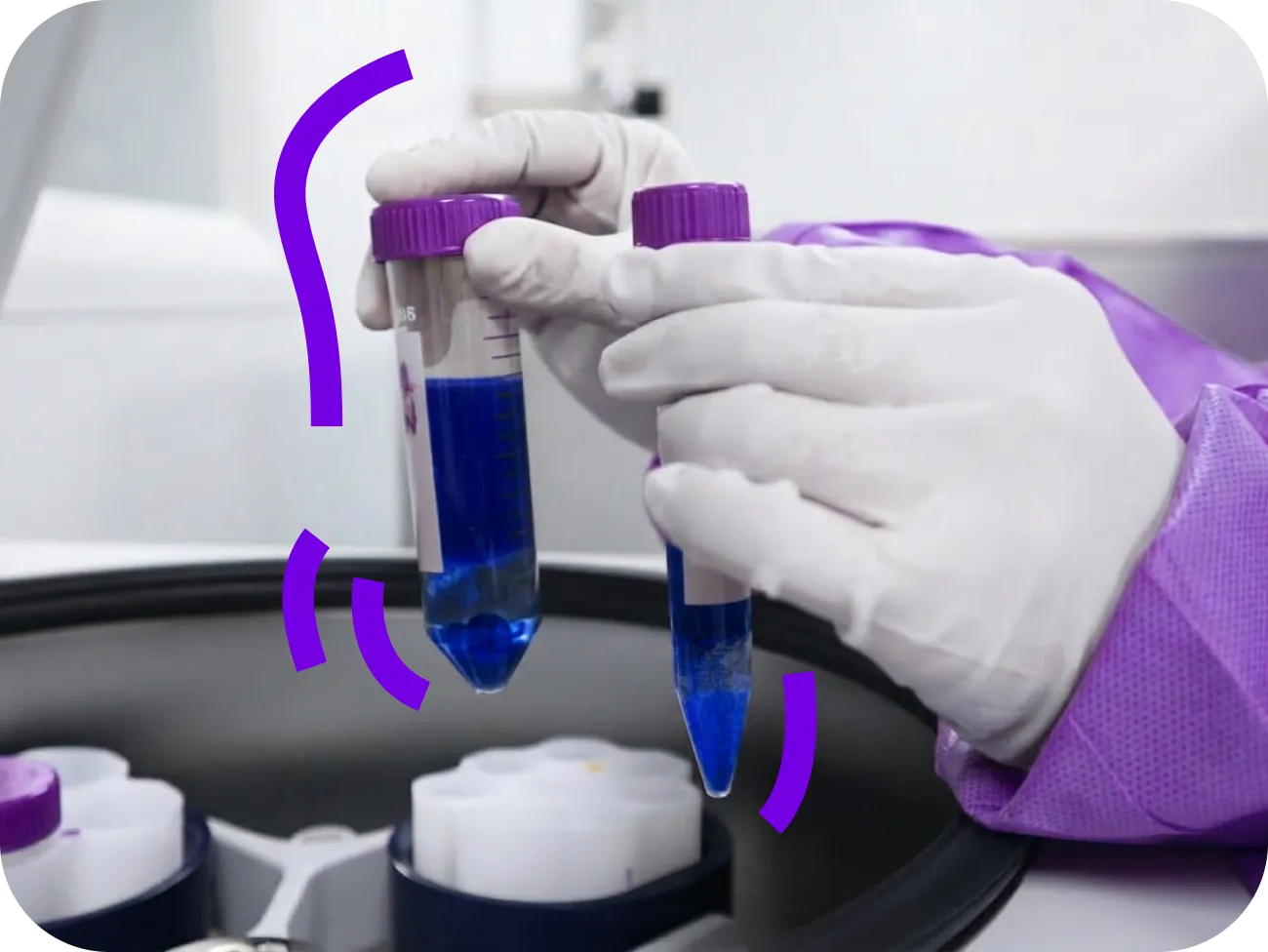

The cutting-edge science behind Salud.ia

We integrate genetic data, laboratory biomarkers, and physiological data from wearable devices—including indicators of biological age—to provide truly personalized health insights.

+800,000

SNPs
Genetic variations analyzed from your unique DNA sample

5,000

Genetic bases
Scientific sources selected and verified by AI

88

Health characteristics
Health and wellness markers decoded from your genome

YOUR HEALTH

Decoded results
Personalized insights tailored to your biology for your well-being.

Advancing longevity through precision science powered by LifeNome

AI-powered health intelligence, based on LifeNome technology, trusted by patients and healthcare professionals around the world.
16
Countries
650,000+
Patients treated
15
Global Awards
99+%
Data accuracy

How it works

Three pillars of intelligence

Genetic intelligence

Uncover long-term biological predispositions encoded in your DNA.
01

Epigenetic intelligence

Track how your biology changes over time and estimate your biological age.
02

Real-world health data

Use biomarkers and wearable devices to provide personalized information.
03
Central Infrastructure

Assessment of susceptibility to polygenic phenotypic traits using dynamic network analysis and machine learning

A foundational architecture for calculating pathway-aware polygenic trait scores using a dynamic heterogeneous knowledge network integrated with machine learning.
This infrastructure layer enables:
Trait-specific polygenic score
Network-based modeling of genes and pathways
Versioning and deployment of modular models
Intelligence delivered via API across multiple platforms
This system underpins all subsequent risk engines.
Scientific infrastructure

About the platform

ZenGen is partnering with Oxford Nanopore Technologies and Amazon Web Services to develop long-read sequencing protocols for commercial use.
Scientists at Oxford “hacked” a bacterial protein to pierce cells and turned it into the world's most accurate biological sensor for reading genetic code.
Amazon Web Services (Amazon Healthomics) manages the infrastructure behind bioinformatics workflows with high levels of security. Data provenance tracking and the supporting infrastructure meet the highest standards.
Multimodal Aging Intelligence

About ZenGen

ZenGen is a leader in commercial applications of genetic analysis and a pioneer in developing analytical methods distinct from those used in the research field.
Founded in 2021 during the pandemic, the company has conducted thousands of genetic tests and, drawing on this experience, has developed innovative workflows.
The ZenGen team has global experience from the Massachusetts Institute of Technology (MIT) and the University of Potsdam, and has received international recognition.

Powered by Genomics AI®

A unified intelligence engine that integrates multiple biological signals into personalized, actionable health insights.
Layer 1
Genetics
DNA variants and polygenic scores
Layer 1
Layer 3
Biomarkers
Blood tests and laboratory diagnostics
Layer 3
Layer 4
Portable devices
Real-time physiological signals
Layer 4
Layer 5
AI Intelligence Layer
Multimodal fusion and risk modeling
Layer 5
Layer 6
Customized Insights
Practical health recommendations
Layer 6

From Data to Personalized Healthcare

How Salud.ia Generates Insights
01

Collect Data

We collect comprehensive biological data from multiple sources to build your unique health profile.
DNA, laboratories, portable devices
02

Analyze Signals

Our proprietary AI engine analyzes thousands of biomarkers and genetic variants.
Genomics AI processes biological data
03

Generate Leads

Advanced models generate personalized risk scores and identify key biological pathways.
Risk predictions and biological markers
04

Custom Optimization

Get science-backed, actionable recommendations tailored to your body.
Health and Lifestyle Tips

Frequently Asked Questions (FAQ)

What is the capacity for conducting polygenic analyses across different populations and geographic regions?
Yes. The platform supports polygenic analysis across different populations and genetic testing platforms. Models are built to account for differences in SNP coverage, reference populations, and data quality.
When large population datasets are available (such as UK Biobank), models are trained directly on those datasets. When that type of data is not available, models are built using findings from multiple peer-reviewed studies.
Each model clearly defines the population it was developed for and the level of interpretation it supports, rather than applying a one-size-fits-all approach.
How is genetic information adapted or contextualized to account for population diversity in a transnational setting?
Genetic risk scores can perform differently across ancestry groups. To address this, the platform adjusts how genetic variants are weighted based on population data and the strength of available scientific evidence.Variants are selected based on factors such as:
  • Replication across studies
  • Statistical strength in genome-wide association studies
  • Evidence from meta-analyses
  • Reproducibility across populations
  • Population allele frequencies
If a variant has strong scientific support but limited validation in a specific population, its influence is reduced and the confidence level of the insight is adjusted accordingly.
This helps ensure insights remain scientifically responsible while still using meaningful biological signals.
What types of polygenic risk models are we using, and how are they validated?
Two types of models are used depending on the available data.
Data-trained models
These are trained directly on large population datasets (such as UK Biobank) where genetic and health outcome data are available. These models support more quantitative interpretation and undergo statistical validation.
Literature-based models
When large datasets are not available, models are built from findings across published genetic studies. These models provide directional insights rather than precise risk estimates.
Once released, each model stays the same to ensure consistent and reproducible results until new versions are thoroughly researched and established by our science team
How is genetic information integrated with biomarkers, lifestyle, and clinical data?
The platform interprets health data using multiple inputs rather than relying on genetics alone.
Different data sources provide different types of insight:
  • Genetics helps identify long-term biological predispositions
  • Biomarkers or lab tests reflect current physiology
  • Wearables provide trends in activity, sleep, and recovery
  • Lifestyle inputs help tailor recommendations to what is realistic for the individual
Insights come from evaluating how these signals work together rather than relying on a single metric.
What is the process for turning raw data into useful information?
La plataforma no presenta puntajes genéticos crudos ni valores de laboratorio por sí mismos. En cambio, los datos biológicos se interpretan a través de modelos estructurados que traducen la ciencia compleja en ideas claras. Los resultados se evalúan en contexto y se limitan a lo que la evidencia científica puede respaldar. Las ideas ayudan a explicar cómo pueden funcionar diferentes sistemas biológicos para un individuo y por qué ciertas estrategias de nutrición, recuperación o entrenamiento pueden ser más adecuadas. A medida que se agregan datos adicionales, como laboratorios, datos de dispositivos portátiles o entradas de estilo de vida, las recomendaciones pueden volverse más específicas mientras se mantiene la interpretación genética subyacente consistente.
How are the findings prioritized, explained, and applied in clinical or wellness use cases?
Insights are prioritized based on several factors, including:
  • Model confidence and quality of evidence
  • Completeness of the available data
  • Whether the insight is clinical or wellness-focused
  • Integration with other available information such as labs, medications, or lifestyle inputs
This helps ensure the most reliable signals are highlighted first.
How does the system learn, improve, or recalibrate as more information is incorporated over time?
The platform improves through model updates and new scientific evidence, not by changing results in real time.
When models are updated or improved, new versions are released. Each version remains fixed for users evaluated under that model to ensure consistency and transparency.

Be among the first to download salud.ia

It will be here very soon.
This site is protected by reCAPTCHA and Google's Privacy Policy and Terms of Service apply.

Message sent successfully

Thank you! Your message has been sent. We will contact you as soon as possible.
Close window

Something went wrong

We were unable to send your message. Please try again later or contact us directly atsalud.ia@gmail.com